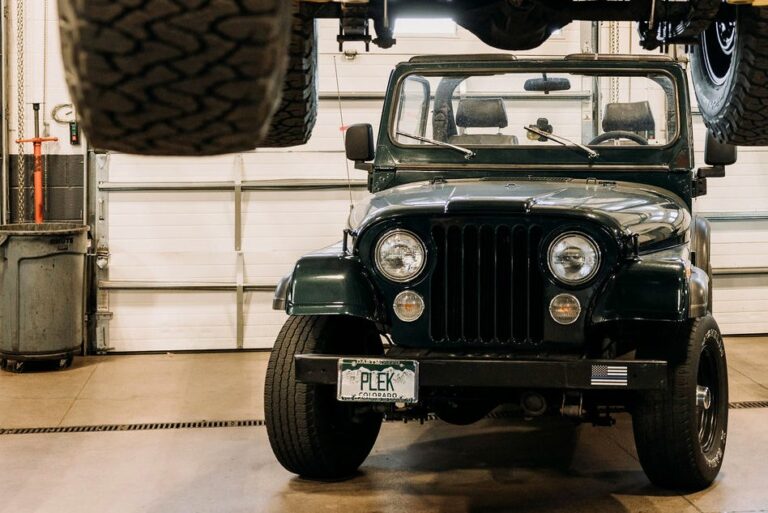
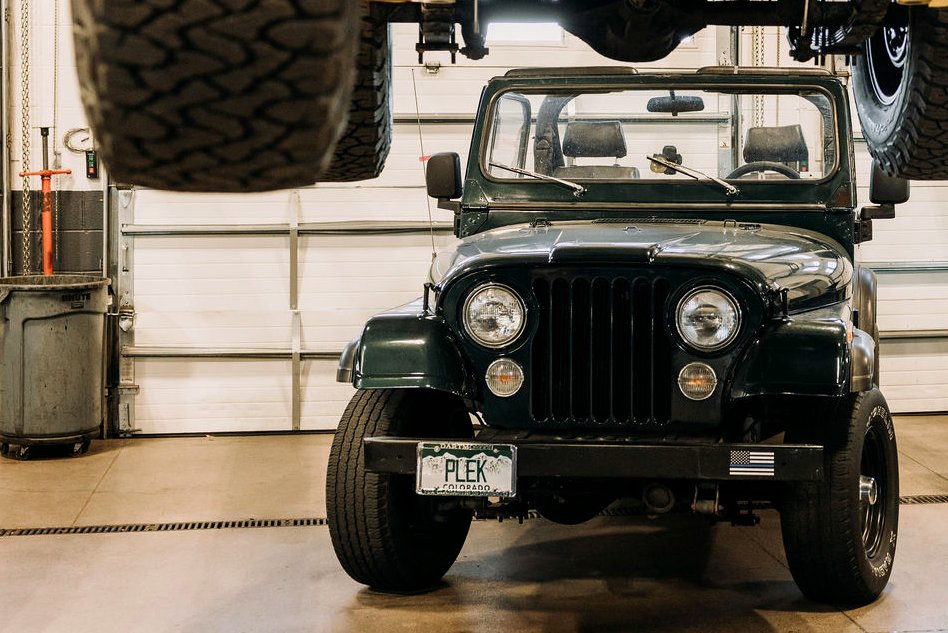
Jeep transmission repair usually starts with a feeling, not a catastrophe. When a Jeep rolls into our bay, we hear the same openers: the Wrangler hesitated going into Drive in a parking lot, the Grand Cherokee flared between gears on the I-25 merge, the Gladiator shuddered under light throttle after a weekend tow. Those are the moments to call us, not the morning the Jeep won’t move at all.
Parker driving cooks transmissions in boring ways. Heat after a grade. Stop-and-go on snow days. A trailer on Saturday and school runs on Monday. None of that means your Jeep is doomed. It does mean early shift changes deserve a real look before anyone recommends a full rebuild on a hunch. Our techs would rather diagnose first.
What “off” usually feels like from the driver’s seat
Slipping is the classic one. RPM climbs, speed doesn’t match. Delayed engagement is next: you shift to Drive or Reverse and wait a beat (or three) before it hooks up. Harsh shifts feel like a kick. Late shifts hang in a gear too long. Limp mode locks you into a protective gear and suddenly the Jeep feels gutless.
Then there’s the messy stuff people smell or see. Red or brown fluid under the center of the Jeep. A burnt smell after a hot pull toward the foothills. A whine that wasn’t there last month. A shudder around a steady highway speed that makes you wonder if it’s the tires.
We’ve watched those patterns long enough to take them seriously. Industry write-ups line up with what we see in the bay: Kelley Blue Book flags delayed movement, no movement in gear, and bucking-type behavior on automatics, and treats leaks as something to handle soon. AAA Club Alliance points to jerking, hesitation, slipping, odd noises, and fluid spots as early flags, not personality quirks.
| Sign | What we check first | Urgency |
|---|---|---|
| Revs up, speed doesn’t | Fluid level/condition, leak, scan | Soon; sooner if it’s getting worse |
| Delay into Drive/Reverse | Leak check, codes, road test | Book it this week |
| Harsh or late shifts | Codes, fluid, software/TSB review | Don’t wait for a road trip |
| Stuck in one gear / limp | Full scan, charging system check | Gentle drive to a safe stop, then service |
| Fluid spots under the Jeep | Find the wet spot, confirm fluid type | Same-day if it’s a puddle |
| Whine, grind, or clunk with drive change | Fluid, mounts, converter/internal checks | Tow if grinding is loud or drive quality collapses |
| Steady-speed shudder | Fluid condition, converter clutch, tires | Inspect before it turns into slip |
| Service Transmission / CEL | Save codes; don’t clear first | Schedule diagnostics with the light on if you can |
Tell us when it happens
Cold only? After a long warm-up? Only when towing the utility trailer? Only on a grade out of Castle Rock? Only after you hit a deep puddle on a trail?
Write that down. Seriously. A two-sentence note on your phone beats “it just feels weird” when our techs try to reproduce the fault on a road test. JK and JL Wranglers, Gladiators, and Grand Cherokees don’t all misbehave the same way, and the pattern matters more than a model nickname.
One more thing Parker owners forget: altitude and grades change how a marginal transmission feels. A soft slip you barely notice on flat roads south of town can show up hard on a loaded climb. Winter short-trips are the opposite problem. The unit never fully warms, then you ask it for a cold merge. Neither scenario invents a broken transmission by itself. Both make an early complaint worth documenting instead of shrugging off until spring.
On our transmission repair service we handle fluid exchanges, leak repairs, clutch work, solenoid diagnostics, and rebuilds for Jeeps and other 4x4s. If your Jeep is already shifting funny, start there with us.
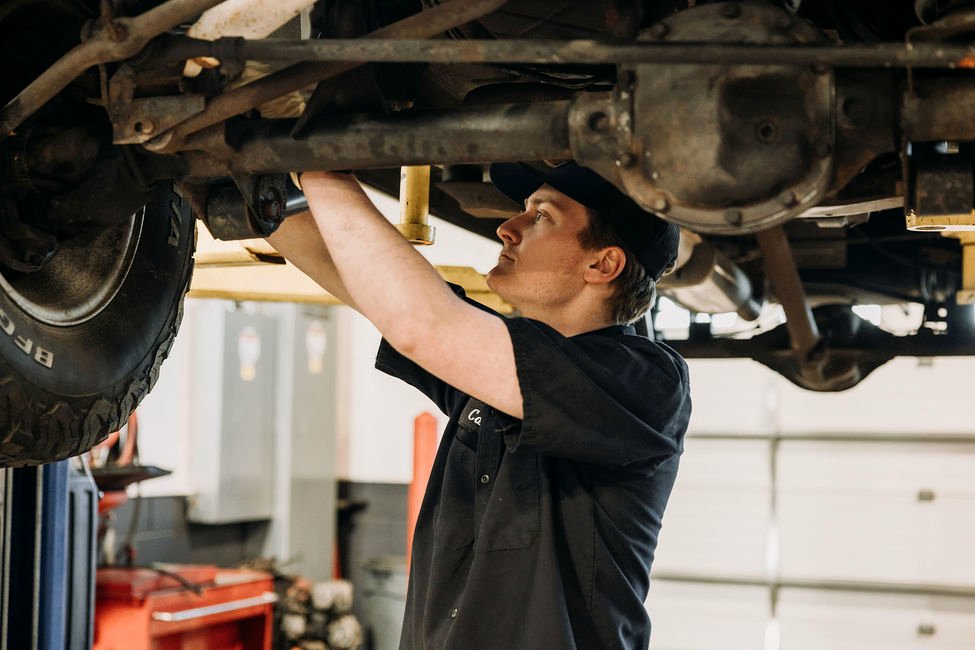
Leaks: topping off isn’t a repair plan
If you’re adding fluid every couple of weeks and calling it maintenance, stop. That’s a leak with a calendar. Seals, cooler lines, pan gaskets, and case issues don’t heal because you bought the right bottle at the parts store.
Find the color. Note where it lands under the Jeep. Avoid crawling under an unsafe vehicle on soft ground. Then let us confirm the source. Heat plus low fluid is how clutch packs get expensive in a hurry, especially after a mountain pull or a summer tow.
Quick clarification: if your only question is how often to change fluid, we’ve already covered that in How Often Should You Change Transmission Fluid in a Jeep or SUV?. If the Jeep is already shifting funny or leaking, you’re in repair territory with us, not sticker-schedule territory.
Lights, limp mode, and why clearing codes first wastes time
A Service Transmission light or check engine light with transmission codes is the Jeep asking for a scan, not a reset. Limp mode is the computer protecting the unit after it sees something it doesn’t like. Clearing codes at home can wipe freeze-frame data our techs need.
When we dig in, we usually start with a full scan (not a one-line code from a cheap reader), look at related modules when the story doesn’t add up, check fluid and leaks where the design allows, verify battery and charging health when electronics are flaky, then road-test the complaint the way you feel it. Software updates and TSBs matter on some late-model Jeeps too. Parts come after that, not before.
If you’re bouncing between jeep repair quotes after a light appears, ask how the shop diagnoses, not how fast they can price a rebuild. We won’t charge to check your vehicle, and prices are approved before work starts. That sequence keeps the conversation honest.
Transmission vs transfer case (people mix these up constantly)
If the weirdness shows up when you shift between park/drive/reverse or between forward gears, we think transmission first. If it shows up when you try to engage 4HI/4LO, or you get a service 4WD message, or it grinds only during mode changes, we think transfer case and driveline first.
Plenty of overlap exists. A clunk under the center of a Wrangler after a muddy weekend isn’t automatically a gearbox. Don’t let a confident parts counter talk you into the wrong assembly. Tell us what happens and when. We’ll sort the drivetrain instead of guessing.
Drive it to us or tow it?
Drive carefully to our shop if the Jeep still moves, Park holds, there’s no loud grinding, and you’re not watching the temp climb. Tow it if it won’t move, Park won’t hold, grinding is ugly, burning smells are strong, slipping is getting worse every mile, or you’re dumping fluid.
Colorado grades and summer heat shrink the gap between “mild annoyance” and “now it’s expensive.” A Grand Cherokee that felt fine on flat Parker roads can start complaining hard once you load it up for a foothills weekend. Don’t wait for that trip to become the diagnostic.
We’re open weekdays 7:00 to 6:00. We offer free Uber rides and tow support. Repairs carry a 2-year / 24,000-mile parts and labor warranty, with extended warranty options on engines and transmissions. Address: 18225 Ponderosa Drive, Parker, CO 80134. Phone 303-841-2228. Email service@parker4x4.com. If you’re sorting local options after a jeep mechanic near me search, ask about transmission diagnostics and Jeep experience, not just who can take you earliest.
FAQ
What are the first signs my Jeep transmission needs attention?
Delayed engagement, harsh or late shifts, slipping under throttle, a new whine or shudder, fluid spots, or a Service Transmission / check engine light. If two of those show up together, stop debating and book a scan with us.
Can I keep driving if it’s slipping a little?
Only if it still moves safely and you’re heading straight to our shop. If slipping gets worse, drive disappears, or temperature warnings show up, tow it. Driving through slip is a great way to turn a repair into a rebuild.
Is a fluid change the same as jeep transmission repair?
No. Fluid service is maintenance. Repair is for an actual fault: leaks, solenoids, valve body issues, clutch wear, converter problems, that kind of thing. Fresh fluid won’t magically fix every complaint, which is why we diagnose first.
How do I know if it’s the transmission or the transfer case?
Gear changes and Drive/Reverse engagement lean transmission. 4WD mode problems lean transfer case. When you’re unsure, say what happens and when. A drivetrain inspection with our techs beats buying the wrong parts.
When should I schedule diagnostics?
When a symptom repeats, a light returns, a leak appears, or you’ve got a tow/mountain weekend coming up. Waiting until the Jeep is stuck in a parking lot removes options. Call us early.
Do near me shop lists mean much for transmission work?
They’re a starting point. After a jeep repair shops near me search, verify that the bay can actually diagnose Jeep transmissions, explain findings before recommending a rebuild, and put pricing in writing first. That’s how we run our transmission work.
If it’s shifting weird, don’t wait for a no-move morning
Get the symptom documented, get it scanned, and decide from facts. Start with our transmission repair service. Save How Often Should You Change Transmission Fluid in a Jeep or SUV? for the day your only question is maintenance timing, not an active complaint.
Cited Sources
American Automobile Association (AAA Club Alliance). “How to Catch Transmission Problems Before They Get Expensive.” AAA Club Alliance, 7 July 2025, https://cluballiance.aaa.com/the-extra-mile/advice/car/catch-transmission-problems-before-they-get-expensive. Accessed 2 Nov. 2026.
Kelley Blue Book. “Transmission Repair and Replacement FAQ.” Kelley Blue Book, 10 July 2020, https://www.kbb.com/ownership-faq/transmission-repair-and-replacement-questions-answers/. Accessed 2 Nov. 2026.
Parker Four Wheel Drive and Auto Repair. “4×4 Transmission Repair Parker and Transmission Services.” Parker 4×4, https://parker4x4.com/services/transmission-repair/. Accessed 2 Nov. 2026.
Parker Four Wheel Drive and Auto Repair. “How Often Should You Change Transmission Fluid in a Jeep or SUV?” Parker 4×4, https://parker4x4.com/how-often-should-you-change-transmission-fluid-in-a-jeep-or-suv/. Accessed 2 Nov. 2026.