It’s 6:30 on a snowy weekday morning, Hess Road hasn’t seen a plow yet, and you reach down to put the truck in 4HI.
Nothing happens. Or something does, but it’s a grind you can feel through the floor, and the 4WD light starts blinking like it isn’t sure either.
That’s usually the moment people remember their four-wheel drive has been acting a little funny since spring. We hear some version of that story at our front desk every winter, and the truck almost always tried to tell somebody earlier. Most of the 4×4 repair we do in Parker starts with a small symptom that was easy to ignore once the weather warmed up. So rather than hand you a dry list of warning signs, we’re going to walk through the moments when those signs tend to show up around here, what they usually point to, and when it’s time to have a 4×4 mechanic take a look.
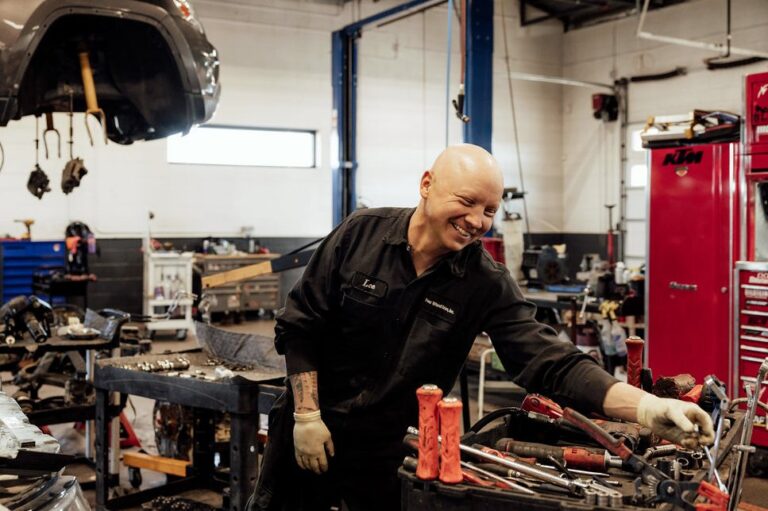
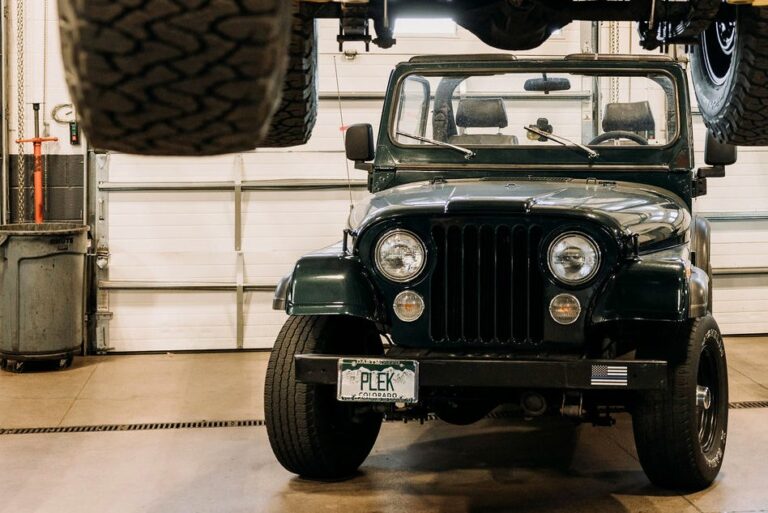
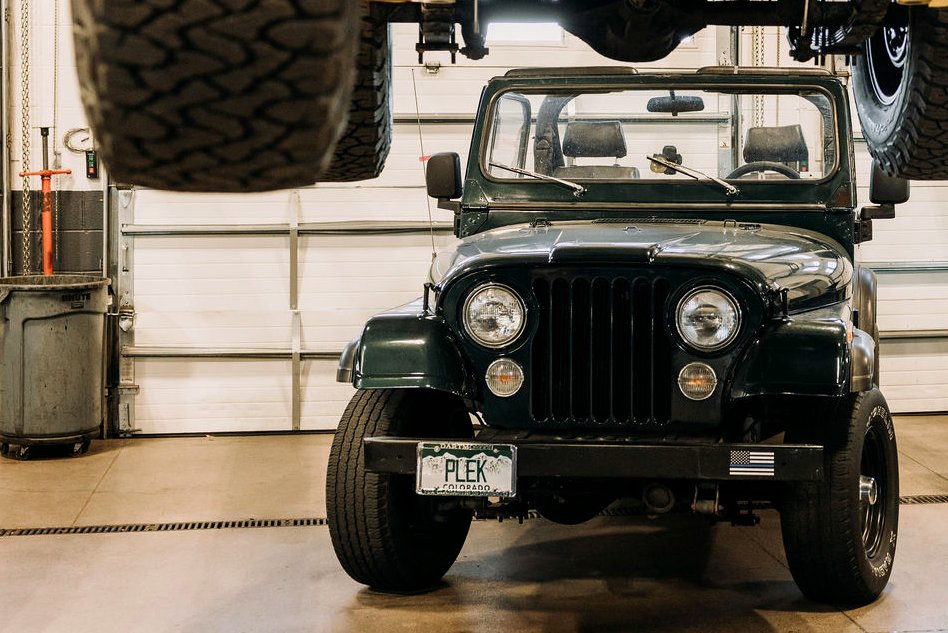
A quick bit of background if you’re new to us. We’ve been working on four-wheel drives in Parker since 1974, with more than 59,000 Jeep and 4×4 repairs behind us. A lot of the trucks and SUVs we see get used the way a 4×4 is supposed to get used.
The first real snow, and a 4WD that won’t shift
The first storm of the season is when shifting issues come out of hiding. You flip the switch or pull the lever and the system takes its sweet time. Maybe it grinds going in. Maybe it goes in fine but won’t come back out of 4LO after you’ve cleared the driveway. Maybe a service 4WD message pops up, goes away after a restart, and then shows up again on the way home.
Any of those can trace back to the transfer case, the actuator, the shift linkage, the front hubs, the fluid, or the electronics that tie it all together. Sometimes it even feels like a transmission problem, which is exactly why it helps to have someone look at the whole drivetrain instead of guessing at one part.
Here’s the part we wish more people knew: if your 4WD feels different than it did last winter, stop forcing it. Shoving a reluctant system into gear over and over is one of the more reliable ways to turn a fluid or actuator issue into a much bigger 4-wheel drive repair.
Two days later, the roads are dry and the truck is fighting you
This one catches a lot of people. The storm rolls through Tuesday, the sun’s out by Thursday, and the main roads are bare and dry while the side streets in your neighborhood are still packed with snow. A lot of folks who leave the truck in 4HI “just in case” end up feeling it bind and hop in a tight turn, like a parking lot or the cul-de-sac at home.
Most part-time 4WD systems aren’t meant to run on dry, grippy pavement. The front and rear axles want to turn at slightly different speeds in a corner, and with nowhere for that difference to go, everything in between takes the strain.
The fix is usually as simple as shifting back to 2WD. But if the binding, hopping, or heavy steering hangs around after you’ve switched out, or the system won’t fully disengage, that’s worth a look. Something in the hubs, the transfer case, or the shift mechanism may not be letting go.
A weekend trip, and a vibration that wasn’t there before
Picture a summer Saturday headed for the trails at the Rampart Range Recreation Area, or a long highway grade with a trailer behind you. Somewhere along the way a vibration shows up. It builds with speed. It gets worse when the truck is working hard. Then it fades on the flat stretch, and you tell yourself it’s probably the road.
A vibration that grows with speed or load usually points us toward the driveshafts, the U-joints, the tires, or worn mounts. On a lifted truck, driveline angles join that list.
If you drive a Jeep or a Ram, Mopar’s own guidance lines up with what we see. Their high-mileage maintenance guide lists trouble shifting into or out of 4WD and grinding or whining from the transfer case as signs it needs attention, along with clicking or popping in turns, vibration that builds with speed, and clunking when you accelerate, let off, or shift into drive or reverse. It also says vehicles that tow, go off-road, see extreme temperatures, or spend a lot of time on hills and rough roads may need service more often.
Read that last part again and then think about a normal year of driving around here. That’s a pretty fair description of the average 4×4 we see.
Monday morning, a spot on the driveway
Look under the middle of the truck, not the front. A fresh spot there usually means the transfer case or one of the differentials is weeping fluid past a seal. It’s easy to miss in winter, when everything underneath is caked in road grime and de-icer and a slow leak blends right in.
A spot that gets bigger overnight, or a burnt smell after a long drive, is a “call us this week” kind of sign. Gears and bearings depend on that fluid, and running them low and hot is how a seal job turns into a bearing job.
A new sound you can’t quite place
Maybe it’s a hum that shows up once you’re rolling at highway speed. Maybe it’s a click on the slow curve, or a clunk when you get back on the gas after a stop sign. A new grind, click, clunk, or hum from underneath is a good reason to get it checked and a bad reason to turn up the radio.
The sound alone can point toward the differentials, U-joints, CV axles, transfer case, or wheel bearings. What really narrows it down is the pattern. What speed does it happen at? Is it in turns or going straight? On the throttle or coasting? Does it change between 2WD and 4WD?
If a specific noise is what’s bugging you, we put together a separate walk-through on what each sound usually means: Why Your 4×4 Is Making Noise: Common Causes and What They Mean. It’s a good place to start. Then bring the truck in anyway so we can confirm it on the lift.
The light that keeps coming back
Cleared the 4WD or check engine light and it came right back? Try to leave it on next time. Those stored codes help us see what the truck was complaining about, and clearing them can make a problem that only shows up now and then a lot harder to catch.
While you’re at it, run your VIN through the NHTSA recalls tool. An open recall won’t explain every drivability problem, but checking takes a couple of minutes and can keep you from chasing a known issue the long way around.
Drivetrain wear: why real-world driving is harder on a 4WD than the manual assumes
Your owner’s manual is written for average driving. A lot of real driving isn’t average. Winter means plenty of short trips where nothing fully warms up. The roads are coated in sand and de-icer for months. Grades are everywhere, some folks tow a camper or a boat every summer, and plenty of trucks hit a dirt road one weekend and do school drop-off the next week.
None of that is a problem on its own. It just adds up, and it tends to catch up with people right after the first big snow. Treat the manual as your starting point and tighten things up when your 4×4 is working harder:
- When you’re in for an oil change, ask about the transfer case and differential fluid too.
- If you’ve added a lift or bigger tires, have the steering, suspension, and driveline angles checked.
- If you just bought a used 4WD that came with “records somewhere,” get a baseline inspection.
- If there’s a leak under the middle of the vehicle, have it looked at before heat gets to the bearings.
Hard driving rarely wears out just one part. It’s usually a little wear spread across everything from the transfer case to the tires, which is why we look at brakes, drive axles, chassis, and fluids while we’re under there.
Drive it in, or have it towed?
If it still drives normally in 2WD and you’re coming straight to us, go easy and drive it in.
If it doesn’t feel safe, don’t. Loud grinding that changes how the truck drives, overheating, a truck that won’t move, steering you can’t trust, or binding so bad you’re fighting the wheel on dry pavement are all reasons to have it towed. Driving it to “see if it gets better” is usually how one repair turns into several. We offer free towing support for exactly this reason, along with free Uber rides if you need to get home or to work while the truck is with us.
What a 4×4 repair visit looks like at our shop
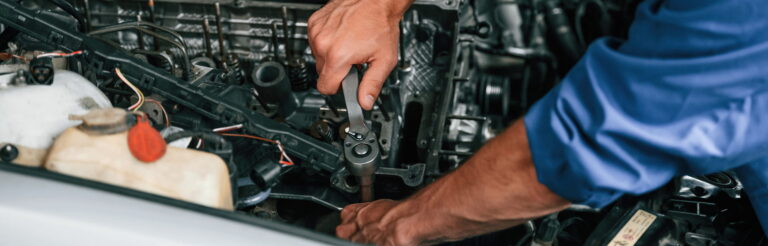
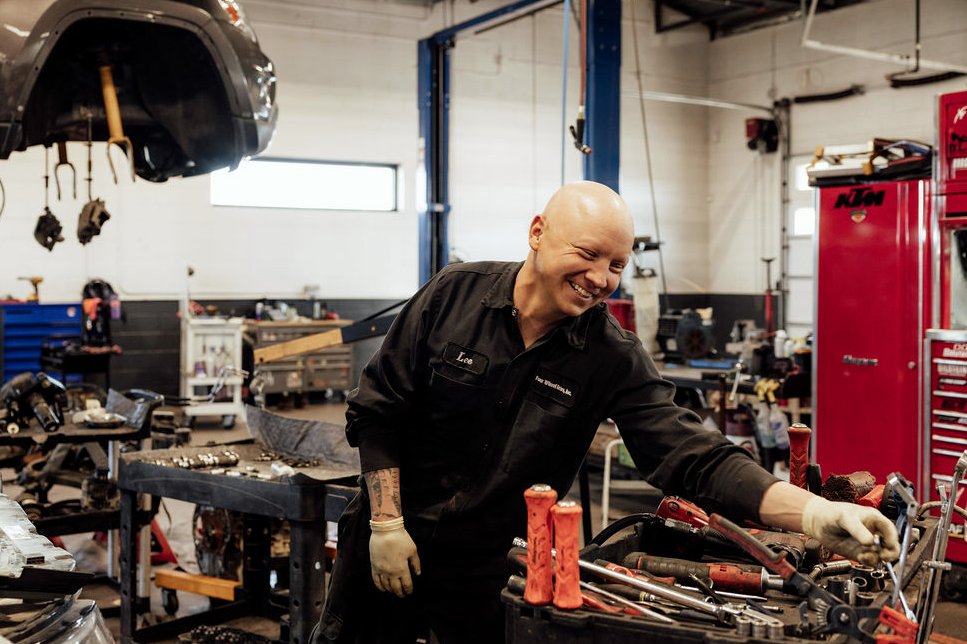
When you bring a 4×4 in, we start by listening. When does it happen, what does it feel like, and what was the truck doing the day before it started? From there we check how the 4WD engages, the level and condition of the fluid in the differentials and transfer case, the U-joints and driveshafts, the CV axles and boots, the wheel bearings, and anything leaking or worn underneath. If the problem only shows up on a road test, we drive it the way you described.
Then we walk you through what we found, what can wait, and what shouldn’t. You approve the price before any work starts, and we’ll never charge you a penny to check your vehicle. Repairs come with a 2-year, 24,000-mile warranty, and there are extended warranty options on engines and transmissions.
Our 4×4 repair service covers 4-wheel drive repair, differential noises, steering and suspension, drivetrain work, engines, and transmission rebuilds. If you’ve been searching for 4×4 repair shops near me after one of the mornings above, that page is a good place to see what we handle.
A few quick answers
What are the first signs my 4WD system needs attention?
Slow or noisy engagement, a service 4WD light that keeps returning, binding on dry pavement, a vibration that builds under load, a spot under the middle of the truck, or a new grind, click, clunk, or hum. Two of those at once is your cue to stop wondering.
Is a free inspection worth it if the 4×4 still works?
If anything has changed or you don’t know the service history, yes. Checking it costs you nothing, and no paid work starts until you’ve approved the price.
When should I get my 4WD checked before winter?
If it acted up at all last season, get it in before the first big storm. Once the snow is already on the ground, your options get a lot slimmer.
Schedule a 4×4 Inspection
If your four-wheel drive has started acting differently, don’t wait for the next snowy commute or trail weekend to find out how serious it is. Contact Us and tell us what’s going on in your own words. That’s all we need to get started. You can also call 303-841-2228 or email service@parker4x4.com. We’re open weekdays from 7:00 to 6:00 at 18225 Ponderosa Drive, Parker, CO 80134.
Sources
Mopar. “How to Maintain a High-Mileage Vehicle (75,000+ Miles).” Mopar Blog, https://www.mopar.com/en-us/blog/how-to-maintain-a-high-mileage-vehicle.html. Accessed 9 Nov. 2026.
National Highway Traffic Safety Administration. “Check for Recalls: Vehicle, Car Seat, Tire, Equipment.” NHTSA, https://www.nhtsa.gov/recalls. Accessed 9 Nov. 2026.
Parker Four Wheel Drive and Auto Repair. “4×4 Repair Near Me And 4WD Mechanic Parker CO.” Parker 4×4, https://parker4x4.com/services/4×4-repair/. Accessed 9 Nov. 2026.
Parker Four Wheel Drive and Auto Repair. Homepage. Parker 4×4, https://parker4x4.com/. Accessed 9 Nov. 2026.